The Third Place With the Fold-Out Chairs: What We Lose When the Anime Club Goes Quiet
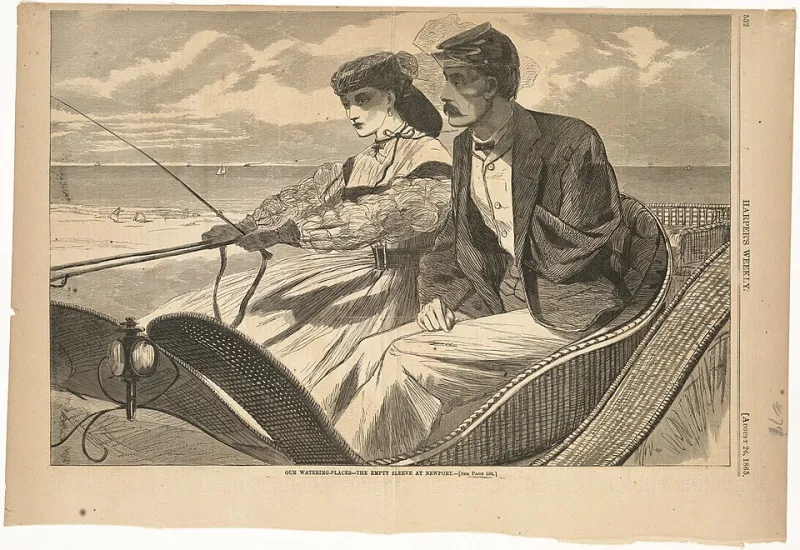
Photo: BPL, Public domain, via Wikimedia Commons
The Smell of a Library Meeting Room
There was a particular smell to it. Bad chairs, projector hum, someone's convenience store snacks, the faint carpet-and-old-books atmosphere of a public library after hours. For a certain generation of American fans, the anime club was not a fandom accessory. It was the fandom's front door. You paid no subscription. You did not need a login. You needed a Tuesday evening and the willingness to sit in a folding chair while a stranger with strong opinions queued up something you had never heard of.
That room is going quiet. Not everywhere, not all at once, but enough that the pattern is hard to ignore: campus clubs thinning out, library programs canceled, the weekly screening replaced by a Discord server that technically never closes and somehow never quite opens either. Streaming made anime effortless. It also made the club optional. And optional, it turns out, is a fragile thing.
Curation Was the Point
The algorithm recommends. A club curator argues. That is the difference. When a nineteen-year-old film student stands in front of a room and says, 'Trust me, the first three episodes are slow, but episode four will ruin you,' they are performing a kind of criticism that no recommendation engine can replicate. They are putting their taste on the line. They are also learning how to talk about art in public, which is a skill.
Clubs were messy curators. They showed licensed DVDs, fansubs burned to discs, whatever someone's older cousin mailed them. The quality was inconsistent. The selection was idiosyncratic. That was the feature. A club could spend a semester on Leiji Matsumoto and then pivot to a magical girl series because one member would not stop talking about it. Streaming's infinite catalog gives you everything except a person saying, 'This one, tonight, with us.'
Discord Is Not a Room
Online fan spaces are real communities. They are also not rooms. A room has a clock. It has a threshold. You have to leave it, and leaving it means something. A Discord server is ambient: always there, always partial, always competing with seventeen other tabs. You can be in the anime club while doing laundry, which sounds convenient until you realize that co-presence is the entire point.
The awkwardness mattered too. In a room, you cannot mute someone who disagrees with you. You have to sit with the person who has the worst take you have ever heard, and then you have to see them next week. That friction is not a bug. It is practice for being a person among other people. American fan culture has become very good at performing community and very bad at tolerating it.
What the Library Understood
Public libraries have been the quiet backbone of American anime fandom for decades. They offered free meeting space, a projector, and an institutional legitimacy that made it okay for teenagers to gather in public around a so-called weird interest. Library anime clubs served kids whose parents would not pay for conventions, kids who could not drive, kids who needed a third place that was not school or home. They were an access program disguised as a hobby group.
When those programs disappear, the loss is not evenly distributed. The people who lose most are the ones who never had a private streaming account, a car, or a friend group that already watched anime. The convention meetup is not a replacement if the convention costs eighty dollars and a train ticket. The Discord server is not a replacement if your household is loud, your internet is unreliable, or you are thirteen and your parents monitor your DMs.
The Awkward Gift of Watching Together
There is a specific joy in watching something with a room full of people who are not all having the same reaction. One person laughs at the exact wrong moment. Someone else gasps. A third person is clearly asleep and will deny it later. The show is the same, but the experience is not. You are not just consuming a story. You are watching other people consume it, and that doubles the story.
Streaming gave us convenience, catalog, and subtitles that arrive on time. It did not give us the person in the next chair who leans over and whispers, 'This is the episode.' It did not give us the mentor who lends you a DVD and expects it back. It did not give us the horrible folding chair, the bad projector, or the walk to the parking lot afterward. Those things were not the point, exactly. But they were how the point got made.
If the anime club is disappearing, it is not because fans stopped caring. It is because we built a fandom that can happen alone, and then we acted surprised when it did. The room is still worth saving. Someone has to book it.