Parasocial Islands: Why Anime and Manga Understand American Loneliness Better Than American TV Does
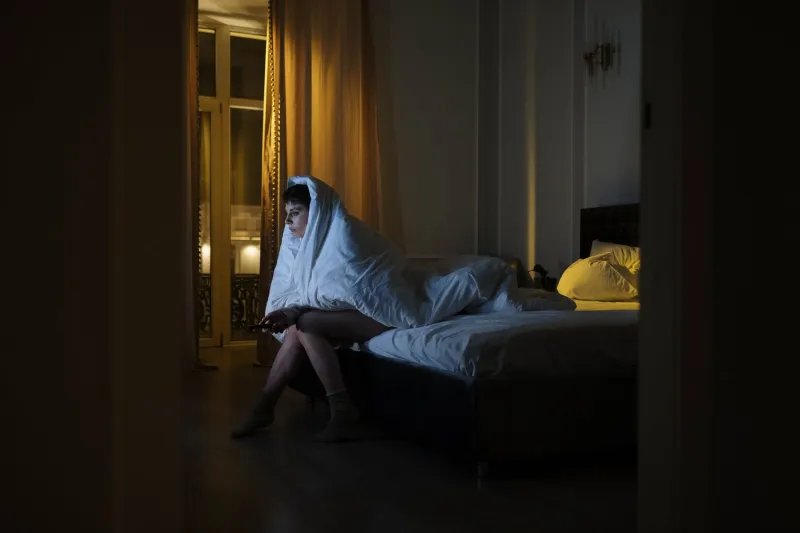
There's a moment a lot of anime fans know but rarely talk about out loud. It's 2 AM, you're rewatching a show you've already seen three times, and the characters on screen feel more like actual company than most of the people in your real life. You're not sure if that's embarrassing or just honest. Probably both.
Here's the thing: you're not alone in feeling that way, which is kind of the whole point.
The United States is in the middle of what public health officials have officially started calling a loneliness epidemic. Former Surgeon General Vivek Murthy literally issued an advisory about it. Studies keep confirming that Americans — especially younger ones — are reporting fewer close friendships, less community belonging, and more time spent in digital spaces that simulate connection without quite delivering it. It's a bleak picture.
And yet, right in the middle of all that, anime streaming numbers keep climbing, VTuber audiences keep growing, and visual novels keep finding devoted Western fanbases. That's not a coincidence.
Japan Wrote the Playbook on Designed Companionship
Japanese media didn't stumble into the loneliness market. It built one, deliberately and over decades, because Japan was grappling with its own isolation crisis long before the US caught up.
The hikikomori phenomenon — young people withdrawing almost entirely from social life — became a recognized social issue in Japan in the 1990s. Rather than just pathologizing it, Japanese media responded to it creatively. Anime, manga, and especially visual novels started building stories explicitly around characters who understood what it felt like to be cut off, misunderstood, or simply unable to connect. Shows like Welcome to the NHK, The Tatami Galaxy, and Serial Experiments Lain didn't treat social withdrawal as a quirky character trait. They examined it with real psychological weight.
That empathy is baked into the DNA of a lot of Japanese storytelling in a way that American network TV — optimized for broad appeal and advertiser comfort — has historically avoided. Hollywood protagonists are usually integrated into social worlds. They have friends, families, and colleagues who show up reliably. Japanese media is far more willing to center the character who eats lunch alone.
The Architecture of Feeling Seen
Visual novels are probably the clearest example of deliberate companionship design. The entire format is built around the idea that you, the player, are developing a relationship with characters who respond to your choices, remember your preferences, and exist in a space that's built entirely around your engagement with them. Games like Clannad, Steins;Gate, and Doki Doki Literature Club have Western fanbases that talk about those characters with an emotional vocabulary usually reserved for real relationships.
That's not a bug. That's the product.
Anime as a format also does something that American serialized TV rarely prioritizes: it gives you enough time with secondary characters to actually care about them. The long-running ensemble cast, the slow-burn friendship arcs, the quiet moments between action beats — these are all structural choices that build genuine attachment. When Naruto finally makes a friend who understands him, you've been watching him struggle for long enough that it actually lands.
American prestige TV is often too busy being Significant to just let characters be company.
VTubers and Idol Culture: The Next Level
If anime characters are designed to feel like friends, VTubers are designed to feel like friends who actually talk back.
The VTuber industry — virtual content creators using anime-style avatars, pioneered by companies like Hololive and Nijisanji — has exploded in the US over the past few years. And the appeal tracks almost perfectly with what we know about loneliness. VTubers stream for hours. They remember their regulars. They share their anxieties and their bad days alongside their wins. The avatar creates just enough distance to make the interaction feel safe, while the live format creates just enough immediacy to make it feel real.
Idol culture operates on similar logic. The appeal of groups like those managed under the AKB48 model, or even the growing Western fanbases for groups like NiziU or ILLIT, isn't just the music. It's the parasocial architecture — the handshake events, the fan voting systems, the sense that your engagement actually matters to someone. For fans who feel invisible in their daily lives, that's genuinely powerful.
Is some of this exploitative? Absolutely worth asking. The idol industry in particular has documented problems with overwork, restrictive contracts, and parasocial dynamics that can tip into unhealthy territory. But the appeal itself is responding to a real need, even if the delivery sometimes fails the people involved.
What Hollywood Gets Wrong
American entertainment tends to treat loneliness as a problem to be solved by the third act. The isolated character learns to open up, joins the group, gets the friends. Resolution. Roll credits.
Japanese media is often more comfortable sitting with isolation as an ongoing condition, exploring it from the inside rather than rushing to fix it. Bocchi the Rock! — one of the most genuinely funny and emotionally resonant anime of recent years — is entirely built around a protagonist whose social anxiety doesn't magically disappear. She grows, incrementally, while still being fundamentally herself. American audiences who watched it didn't just enjoy it. They recognized themselves in it.
That recognition is the whole game. When media reflects your actual inner life back at you — not a sanitized version, not a version that's already on its way to being fixed — it creates a kind of connection that's genuinely hard to replicate.
The Community That Forms Around the Loneliness
Here's the beautiful, slightly ironic twist: the media that speaks to isolated people has generated some of the most active fan communities on the internet. Anime Discord servers, manga fan forums, VTuber clip channels, fan fiction archives — these are spaces where people who struggle to connect in physical social environments find each other through shared obsession.
The loneliness that drives someone to anime at 2 AM can, with time and the right corner of the internet, turn into a found family that's genuinely sustaining. That's not a guaranteed outcome. But it's a real one, and it happens constantly.
Japanese media didn't create American loneliness. But it looked at it clearly, built something that spoke to it honestly, and in doing so, gave a lot of isolated people a door into community they might not have found otherwise.
Hollywood is still making shows about people who already have friends. Japan's been making shows for the rest of us.