Streamed Into Silence: How Corporate Licensing Is Erasing the Anime Music You Love
There's a specific kind of frustration that hits when you open Spotify, search for a soundtrack you've been thinking about since 2 a.m., and find absolutely nothing. No album. No singles. Not even a stray lo-fi remix. Just a white void where Yoko Shimomura or Yuki Kajiura should be. If you're an anime fan in the US, this isn't a rare glitch — it's practically a weekly ritual of disappointment.
The anime music licensing crisis isn't new, but it's getting worse. And the people making decisions about what you can and can't hear are betting you'll either forget about it or find a workaround quiet enough that nobody has to answer for it.
The Invisible Wall Between You and the OST
Here's the basic problem: anime soundtracks exist in a licensing ecosystem that was never really built with Western fans in mind. When a streaming platform licenses an anime series for US distribution, that deal typically covers the visual content — the episodes themselves. The music? That's an entirely separate negotiation, often involving Japanese music publishers, record labels like Lantis or Flying Dog, and sometimes individual composers who retain partial rights to their own work.
The result is a patchwork nightmare. You might be able to stream Attack on Titan on Crunchyroll in full HD, but the Hiroyuki Sawano score that made that show emotionally devastating? Good luck finding it on Apple Music without a VPN and a prayer. Some OSTs surface on Western platforms for a few months, then quietly disappear when licensing windows close and nobody bothers to renew them. Others never show up at all.
This isn't an accident. It's a financial calculation, and anime music keeps losing the math.
Why the Industry Doesn't Fight Harder for This
Let's be direct about something: the Western entertainment industry has always treated anime as a niche product to be monetized at arm's length. The streaming wars changed that perception for the video content side — Netflix, Crunchyroll, and Amazon have all spent serious money acquiring anime titles because the viewership numbers finally got too big to ignore. But music rights didn't get the same memo.
Licensing a major Western film score for global streaming is a headache, sure, but it's a headache that studios and labels have decades of infrastructure to manage. Anime music rights, by contrast, often require navigating Japanese corporate structures that operate on different timelines, different communication norms, and different assumptions about what international distribution even means. For a lot of Western platforms, the ROI calculation on untangling that web just doesn't pencil out — especially when the alternative is simply not offering the music and watching fans shrug and move on.
Except fans aren't just shrugging. They're doing something that makes the industry quietly furious: they're going back to piracy, and they're buying vinyl.
The Collector Market Blowing Up Is a Symptom, Not a Flex
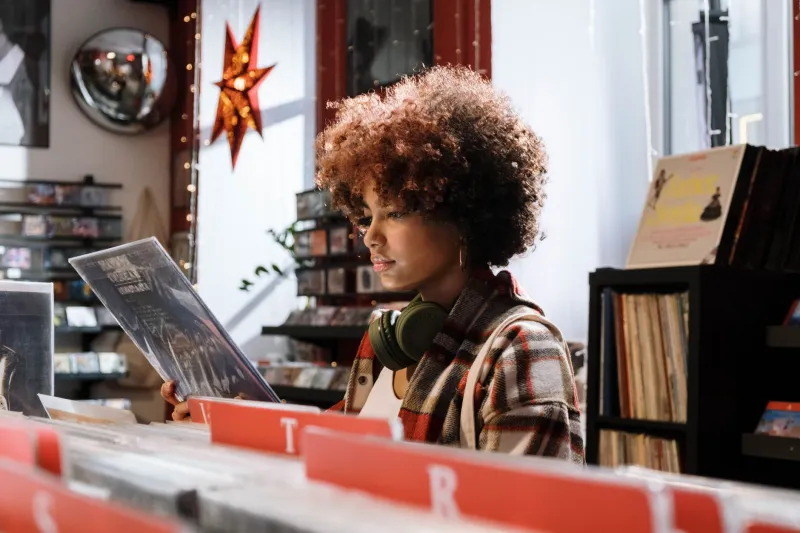
Anyone who's tried to buy an official anime soundtrack on vinyl in the last three years knows the market has gone absolutely sideways. Limited pressings from labels like Iam8bit or import releases from Japan regularly flip for two to four times retail on Discogs within days of dropping. A clean copy of the Cowboy Bebop OST or the Neon Genesis Evangelion score can run you over $100 without blinking.
Some people look at this and see a thriving collector culture. That's one way to read it. Another way is to recognize that when a digital product is functionally unavailable through legitimate channels, physical media becomes a survival strategy. Fans who want to own anime music in any permanent, reliable format are being funneled into a secondary market that does absolutely nothing to compensate composers, labels, or anyone else who made the music in the first place.
The same logic applies to piracy. YouTube channels that upload full anime OSTs rack up millions of plays not because fans are trying to steal anything, but because there is genuinely no legal alternative. Streaming platforms have spent years training consumers to expect music to be accessible — and then carved out this specific corner of music culture and left it to rot.
Corporate Consolidation Is Making It Worse
The merger of Crunchyroll and Funimation under Sony's umbrella was supposed to streamline the Western anime experience. And for video content, it mostly did — catalog got centralized, subtitles got standardized, whatever. But Sony also owns one of the largest music publishing operations on the planet, which creates a conflict of interest so obvious it's almost funny.
When the company controlling your primary anime streaming platform also has financial incentives tied to its own music catalog, the motivation to aggressively pursue third-party Japanese music licensing deals gets... complicated. It's not a conspiracy, it's just capitalism doing what capitalism does: optimizing for the path of least resistance and maximum margin. Anime music fans are not that path.
Smaller platforms and dedicated music services like Mora or RecoChoku exist in Japan and carry deep catalogs of anime OSTs — but they're geo-locked, and using them from the US ranges from technically difficult to outright impossible depending on the service.
What Actually Needs to Happen
Fans have been asking for better anime music access for years, and the asks aren't complicated. Centralized, region-appropriate licensing deals that travel with the anime license itself. Transparent communication from streaming platforms when music rights lapse, instead of silent removal. More investment in direct-to-consumer digital sales for OSTs, which would let labels like Lantis reach Western fans without relying on Spotify or Apple to do the work.
Some Japanese labels have started moving in this direction — Bandai Namco Music Live has made more catalog available internationally in recent years, and a handful of composers have taken matters into their own hands through Bandcamp. But these are individual acts of goodwill in a system that isn't structurally designed to support them.
The uncomfortable truth is that until Western streaming platforms start treating anime music with the same commercial seriousness they apply to Western soundtracks, fans are going to keep getting squeezed. They'll keep paying inflated vinyl prices, keep running searches that return nothing, and keep quietly pirating music they would happily pay for if anyone would let them.
The music is out there. The audience is out there. The only thing missing is an industry willing to connect the two — and right now, that industry is too busy looking the other way.