Why Your Brain Trusts Anime Character Design More Than Anything Hollywood Has Ever Drawn
Let's be honest about something that rarely gets said out loud in polite fandom circles: Western-made dating simulators and visual novels have a character design problem. Not a budget problem, not a writing problem — a design problem. And it runs deeper than whether a character has big eyes or color-streaked hair. It runs straight into the psychology of how we decide, almost instantly, whether a fictional person feels worth caring about.
Japanese character design has had roughly forty years to build a visual grammar that Western audiences have absorbed through anime, manga, gacha games, and visual novels. By now, that grammar is practically a native language for a huge slice of the American fanbase. And when a Western studio tries to speak it with an accent? Players notice. They might not be able to articulate why something feels off, but they feel it — and they close the app.
The Vocabulary of the Face
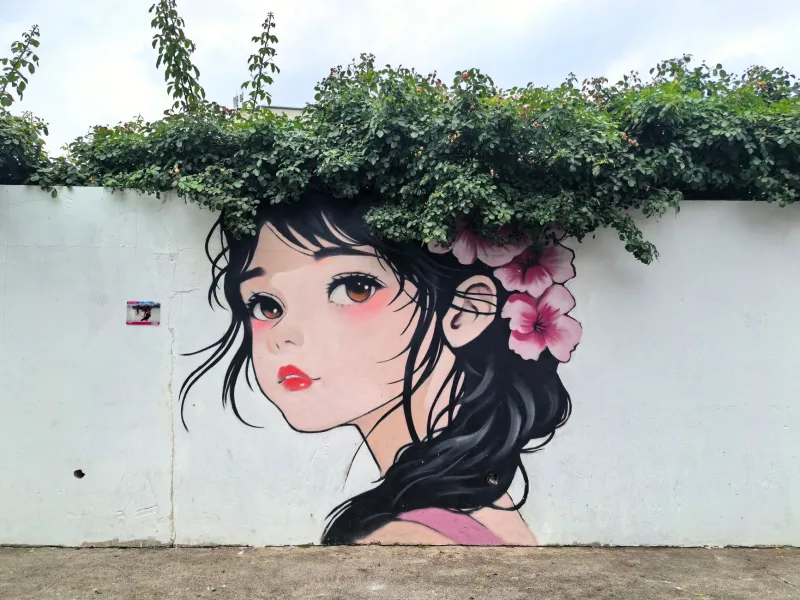
Start with the basics. Japanese character design — particularly in the romance and visual novel space — operates on a set of conventions that are anything but arbitrary. Large, luminous eyes aren't just a stylistic quirk; they're a deliberate signal of emotional transparency. You can read a character through their eyes in ways that more realistically proportioned Western art often doesn't allow. The exaggeration isn't naïveté — it's communication.
Facial structure in Japanese character design also tends to lean into softness and idealization in ways that feel consistent across genres. There's a reason character archetypes — the kuudere, the genki girl, the stoic childhood friend — come with recognizable visual signatures. Fans who've spent years consuming this content have internalized those signals. They know, without thinking, what a character's color palette and eye shape are trying to tell them before a single line of dialogue lands.
Western dating sims, even well-funded ones, often reach for realism or a distinctly Western cartoon aesthetic that doesn't carry the same emotional shorthand. It's not that Western art is worse — it's that it's speaking a different language to an audience that's already fluent in something else.
Fashion as Character Architecture
Clothing in Japanese character design isn't decoration. It's biography. A character's outfit — whether it's a sailor uniform with personalized accessories, a gothic lolita ensemble with deliberate asymmetry, or a deceptively simple hoodie that hides layers of personality — tells you who they are before the story does. Japanese designers treat fashion as a narrative tool with the same seriousness that a novelist treats word choice.
Western visual novel characters, by contrast, often feel dressed rather than designed. There's a flatness to it that fans who've grown up on titles like Fate/stay night, Clannad, or Danganronpa can sense immediately. It's the difference between a character who looks like they exist in a world and a character who looks like they were placed inside one.
This extends to color theory, too. Japanese character designers are notoriously deliberate about palette — warm colors for approachable characters, cool tones for distant ones, split schemes for characters with internal conflict. It's a system. And once you've absorbed it, you start expecting it everywhere.
The Archetype Isn't the Problem — the Execution Is
Here's where things get complicated, because the criticism of Japanese character design often centers on its archetypes feeling rigid or tropey. And sure, there's a version of that critique that holds water. But archetypes work because they're efficient — they give audiences a foundation to stand on while the story builds something more specific on top.
Western dating sims frequently try to sidestep archetypes in the name of originality and end up creating characters who feel undefined instead of fresh. Without that initial hook — that oh, I know roughly who you are moment — players struggle to invest. Japanese design philosophy understands that familiarity and depth aren't opposites. You can give someone a recognizable type and still surprise them with who that character actually turns out to be.
Games like Persona 5 are a masterclass in this. Every romantic option starts from a legible archetype and then systematically dismantles your assumptions about them. The design pulls you in; the writing keeps you there. Western games rarely nail both ends of that equation simultaneously.
Soft Power in Pixel Form
What's actually happening here is a soft power story, and it's one America should probably pay more attention to. Japan has spent decades exporting a visual and emotional framework through its entertainment industry, and that framework has become the default for millions of American fans. It's not manipulation — it's just the natural result of consistent, high-quality cultural output landing in a market hungry for it.
The downstream effect is that American audiences now evaluate all character design — including domestically produced content — through a lens that was largely shaped in Tokyo, Osaka, and Kyoto. When a US-based indie studio releases a visual novel with hand-drawn Western art, it's not competing against other Western visual novels. It's competing against twenty years of accumulated Japanese visual storytelling that's already living rent-free in the player's head.
This isn't a call to demand that Western creators imitate Japanese design — that road leads to its own problems, including the kind of lazy cultural mimicry that strips the meaning out of the original conventions. But it is worth acknowledging what's actually going on when a Western dating sim underperforms despite solid writing and genuine effort.
What It Reveals About Us
There's something worth sitting with here. When American fans say a Japanese-designed character feels more real to them than a Western-designed one, they're not describing objective reality. They're describing the reality their media diet has constructed for them. That's not a criticism — it's just what immersion in any cultural framework does over time.
But it does raise questions about beauty standards, emotional expectations, and whose visual language gets to define what "compelling" looks like in digital spaces. Japanese character design has, in many ways, become a globalizing force — one that's reshaping what Western audiences find attractive, relatable, and emotionally resonant without most of them realizing it's happening.
The anime girl next door isn't next door. She was designed in a studio in Japan, filtered through a decade of fandom, and now lives in the part of your brain that decides what you care about. Western dating sims aren't losing because they're bad. They're losing because they're trying to compete in a market that's already been fundamentally reshaped by a design philosophy they didn't build and can't easily replicate.
That's not a tragedy. But it is a conversation worth having.