From Page to Screen: Why Manga Adaptations Break Our Hearts — And the Rare Ones That Don't
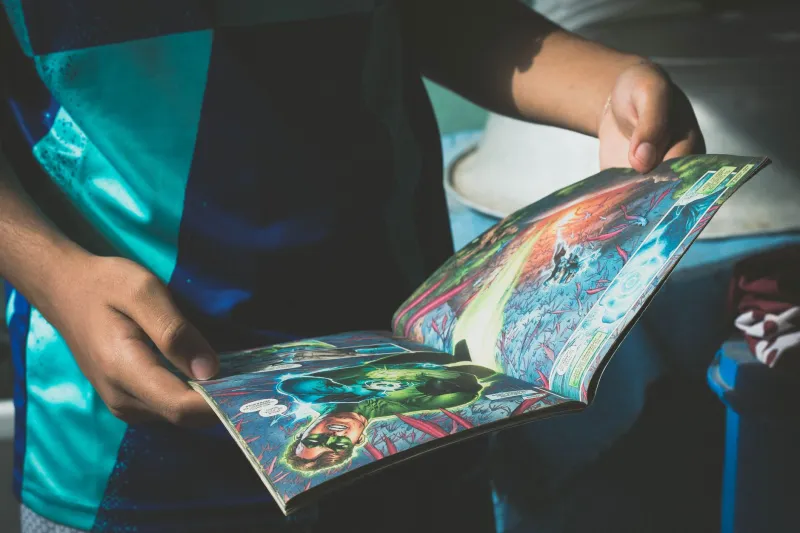
The announcement drops. Your favorite manga — the one you've been reading for years, the one with the dog-eared pages and the chapters you've re-read so many times you basically have them memorized — is getting an anime adaptation. For a split second, it's pure joy. Then the anxiety kicks in.
If you've been in anime fandom long enough, you already know how this story tends to go. The adaptation lands, it looks a little off, the pacing feels rushed, and suddenly you're that person in every comment section typing "just read the manga" in increasingly desperate italics. It's practically a rite of passage at this point.
But here's the thing: the manga-to-anime adaptation gap isn't random. There are real, structural reasons why the translation from page to screen so often misfires — and just as real reasons why, occasionally, it doesn't.
The Production Machine Doesn't Care About Your Feelings
Let's start with the uncomfortable truth: most anime adaptations exist primarily as advertisements. Not in a cynical, conspiratorial way — just in a very practical, industry-driven way. A lot of adaptations are greenlit specifically to boost manga sales, which means they're often produced fast, on tight budgets, with a limited episode count designed to cover just enough story to push viewers toward the source material.
That structural reality creates an almost impossible task for the production team. They're being asked to compress hundreds of chapters of carefully paced storytelling into twelve or thirteen episodes, with animation budgets that don't always allow for the visual ambition the source material demands. Something has to give. Usually, it's the stuff that made you fall in love with the manga in the first place — the quiet character moments, the slow-burn tension, the subtle visual storytelling that lives between panels.
When Tokyo Ghoul hit screens in 2014, fans of Sui Ishida's manga watched in real time as entire arcs got flattened and emotional beats that took chapters to build were collapsed into single scenes. The bones of the story were technically there. The soul? Not so much.
The Pacing Problem Is Actually Two Problems
Pacing in manga is a genuinely different craft than pacing in animation. A manga artist controls time through panel size, page layout, and the deliberate choice of what to show versus what to leave to the reader's imagination. A full-page spread of a character's face can communicate grief, rage, or resolve in a way that forces the reader to sit with that moment. You can't skip it. The page is right there.
Anime doesn't have that luxury — or more accurately, it has a completely different set of tools. Twenty-four minutes of screen time moves at a fixed pace regardless of emotional weight. A scene that a manga might stretch across twelve panels can be over in forty seconds of animation. Studios can slow things down with lingering shots and silence, but that costs money and runtime that a tight production schedule often won't allow.
The flip side is also true: manga pacing can drag in ways that anime has to paper over. Weekly serialization means some arcs exist partly just to fill pages between big story moments. A smart adaptation can actually tighten that up — but doing it well requires a production team that genuinely understands the source material, not just its plot points.
When the Adaptation Actually Respects the Source
Here's where it gets interesting, because some adaptations do get it right — and when they do, it's usually for specific, identifiable reasons.
Fullmetal Alchemist: Brotherhood is the gold standard for a reason. Bones had already made one adaptation of Hiromu Arakawa's manga (the 2003 series, which diverged into its own story before the manga concluded), so when Brotherhood launched in 2009, they had the benefit of a completed source and an audience that was genuinely invested in seeing the manga done faithfully. The result was a 64-episode run that had the space to breathe, the budget to execute the big moments, and a production team that treated the source material as something worth honoring rather than just mining for content.
Vinland Saga is a more recent example. Wit Studio's adaptation of Makoto Yukimura's brutal historical epic didn't rush the Viking-age tragedy at its core — it let the emotional weight accumulate the way the manga intended. The fight choreography was exceptional, yes, but what really worked was the willingness to let characters exist in their grief and moral confusion without cutting away too quickly.
What these successes share: adequate episode counts, studios with genuine investment in the material, and production timelines that weren't driven purely by promotional urgency.
The Creative Choices That Make or Break Everything
Beyond budget and episode count, there's a subtler factor that often determines whether an adaptation lands — directorial vision. The best manga adaptations aren't just animated versions of the source; they're reinterpretations that understand what the manga was doing and find cinematic equivalents.
When Naoko Yamada directed A Silent Voice for Kyoto Animation, she brought a visual language to Yoshitoki Oima's manga that didn't just reproduce it — it deepened it. The way she used feet and averted gazes to communicate social anxiety added a layer that felt native to film rather than transplanted from comics. That's the difference between adaptation as translation and adaptation as interpretation.
On the other end of the spectrum, you get adaptations that treat the manga as a script rather than a blueprint — checking off plot points without asking why those plot points mattered in the first place. The result feels hollow even when it's technically faithful.
A Framework for Managing Your Expectations
So how do you watch an adaptation announcement without either catastrophizing or setting yourself up for disappointment? A few things worth paying attention to:
Episode count relative to source material. A 12-episode adaptation of a 30-volume manga is almost certainly going to cut deep. A 24-episode adaptation of a more contained story has a fighting chance.
The studio's track record. Not just in general, but with this type of material. A studio known for action spectacle adapting a slow-burn psychological drama is a different risk profile than a studio known for character-driven work.
Whether the source is complete. Adaptations of ongoing manga are almost always working with one hand tied behind their back — they either rush to a stopping point, invent an anime-original ending, or stall with filler. None of those options are great.
How the creative team talks about the source. When directors and producers speak publicly about the material with specific, genuine enthusiasm — citing particular arcs, themes, or creative challenges — that's a better sign than generic hype.
None of this is a guarantee. Even well-resourced adaptations with great pedigrees can misfire. But understanding the structural pressures that shape every manga-to-anime translation makes you a sharper viewer — and honestly, a little more sympathetic to the people trying to do an impossible job.
The manga will always be the manga. The anime is something else: a different medium's attempt to honor something it can never fully contain. Sometimes that attempt falls embarrassingly short. And sometimes — just sometimes — it creates something that stands on its own.