Something Gets Lost in the Throat: Why Japanese Voice Acting Hits Different and What Dubs Can't Fix
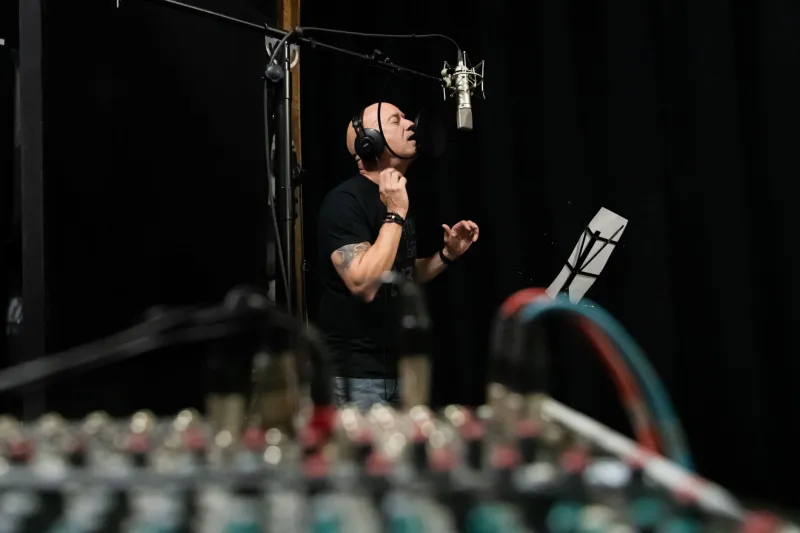
There's a moment in almost every anime — you know the one. A character screams a name, or whispers something devastating, or laughs in a way that somehow sounds like crying. And if you're watching with the original Japanese audio, that moment lands like a punch. Then you switch to the dub out of curiosity, and the same line feels like a photocopy of a photocopy. Technically legible. Emotionally hollow.
This isn't a dub-bashing piece. English dubbing has genuinely gotten better — some recent dubs are legitimately great, and we've written about that. But there's still a persistent, almost structural difference between how Japanese voice actors — seiyuu — deliver performances and how their English counterparts interpret the same material. And that difference isn't just about talent. It's about culture, training, and fundamentally different assumptions about what "real" emotion is supposed to sound like.
The Seiyuu Pipeline Is Not Like Anything in the US
First, some context. In Japan, becoming a professional voice actor is a formal, competitive, and intensely cultivated career path. Major talent agencies run dedicated seiyuu schools. Aspiring performers train for years in breath control, vocal range, physical projection, and character consistency before they ever get near a recording booth. The industry treats voice acting as a distinct performing art — not a side gig for screen actors between jobs, which is often how English dubbing gets staffed.
The result is a professional class of performers who are exceptionally technically skilled and who have internalized a very specific performance vocabulary. That vocabulary is built on theatrical tradition, not naturalism. Japanese voice acting draws from stage performance, classical storytelling, and a cultural aesthetic that has always valued emotional expressiveness over restrained realism. Kabuki theater, rakugo storytelling, even certain anime-adjacent manga performance traditions — all of it feeds into how a seiyuu is trained to inhabit a character.
In the US, the dominant acting philosophy since at least the mid-20th century has trended toward naturalism. The Stanislavski method, method acting, the whole "be the character" school of thought — American performers are largely trained to suppress theatrical artifice in favor of something that reads as authentic and understated. Subtle is sophisticated. Loud is suspect.
Set those two traditions next to each other and you start to understand why the same emotional moment can sound completely different depending on which language track you're on.
What "Over-the-Top" Actually Means
When Western viewers call Japanese voice acting "over-the-top," they're not wrong, exactly — they're just applying the wrong measuring stick. The performances aren't failing at naturalism. They're succeeding at something else entirely.
Take the way seiyuu handle rage. An angry character in an English dub tends to get a controlled, low-register intensity — think gritted teeth, clipped consonants, restrained fury. An angry character voiced by a Japanese actor often goes somewhere else: a sharper pitch, a kind of vocal strain that communicates effort and physical heat, sometimes an almost operatic quality that feels performative to American ears. But to a Japanese audience raised on that performance register, the strain is the authenticity. The exertion signals that the emotion is real and overwhelming, not contained.
Or take vulnerability. A crying character in English dubbing often sounds like someone trying hard not to cry — tight throat, controlled breaks. In Japanese voice acting, the same character might use a completely different vocal texture, something that sounds almost childlike or fragile in a way that American performances rarely allow adult characters to sound. That's not immaturity in the performance. It's a culturally specific way of communicating emotional exposure.
The problem is that these signals don't automatically translate. American viewers hear the heightened register and their brains tag it as melodrama, exaggeration, or bad acting — because those are the frames they have. The emotional code is real; the decoder just isn't installed.
The Specific Techniques That Don't Survive Translation
Beyond broad philosophy, there are concrete vocal techniques that seiyuu deploy constantly and that English dubbing either can't replicate or actively avoids.
Breath as character. Japanese voice actors use audible breath — sharp intakes, slow exhales, held pauses before a line — as expressive tools. These breaths carry emotional information. They're not mic bleed or imperfect editing. In dubbing, breaths are often smoothed out or removed entirely because they can feel awkward in English, but something real gets lost in that cleanup.
Pitch modulation as emotional mapping. Seiyuu will often track a character's psychological state through deliberate pitch shifts within a single scene — higher when scared or excited, lower when resolved or defeated. It creates an almost musical arc. English dubbing tends toward a narrower pitch range that reads as more "normal" but flattens the emotional journey.
The untranslatable break. There's a specific quality in Japanese voice acting when a character is overwhelmed — a kind of crack or roughness in the voice that isn't quite crying, isn't quite shouting, but lives in a register between both. It's technically demanding and emotionally specific. English doesn't have a natural performance tradition for it, so dubs often substitute something adjacent that doesn't quite hit the same.
Silence and spacing. Japanese voice performances are often built around what doesn't get said. A seiyuu will let a line breathe in a way that creates tension or tenderness. Dubbing, constrained by lip sync timing, sometimes can't afford those pauses — lines get compressed, and the emotional weight that lived in the silence disappears.
Why This Actually Matters
This isn't just an audiophile argument about which track sounds cooler. The performance gap matters because it affects how stories land — and therefore what kinds of stories feel accessible to Western audiences.
Anime regularly deals with emotional extremes: grief, obsession, transformation, shame, devotion. These aren't subtle states. They require performances that can hold that kind of weight without collapsing into irony or self-consciousness. Japanese voice acting has a tradition built for exactly that. When a seiyuu commits to a moment of raw anguish, the performance convention supports it. The audience knows how to receive it.
When that same moment is dubbed into English with a more naturalistic register, it can feel muted — like the show is pulling its punches. Or worse, when a dub actor does try to match the original's intensity, it can read as campy or unhinged because English-speaking audiences don't share the performance framework that makes the intensity legible.
This is one reason why the "sub vs. dub" debate, for all its exhausted reputation in fandom, keeps not dying. It's not really about snobbishness or gatekeeping. It's about the fact that some of what makes anime emotionally distinctive is baked into the sound of it — into specific voices, specific techniques, a specific performance language that took decades to develop and can't be fully ported across cultural lines.
The good news is that awareness helps. Once you understand why Japanese voice acting sounds the way it does, the "over-the-top" label starts to dissolve. You stop hearing bad acting and start hearing a different kind of acting — one that's doing something real, something demanding, and something that deserves to be taken seriously on its own terms.
Your ears just need a little recalibration.