Fluent in Fiction: The Confidence Gap Between What Anime Taught You and How Japan Actually Works
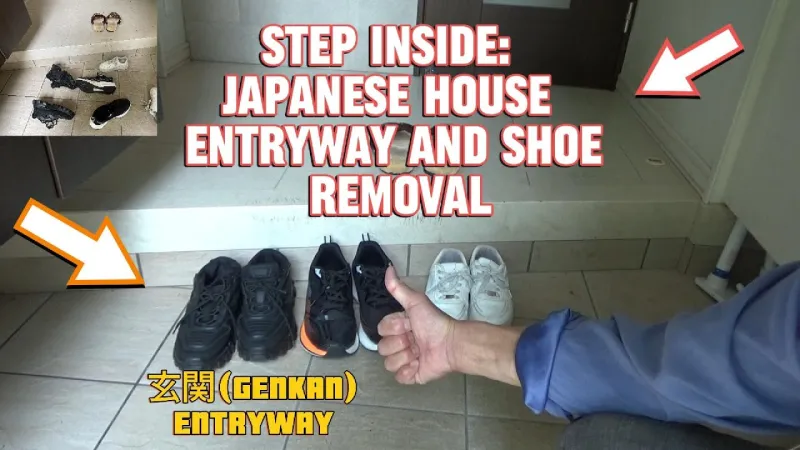
Photo: foreign tourist politely removing shoes at Japanese home entrance genkan, via i.ytimg.com
Every long-term anime fan eventually develops a theory of Japan. Mine came around season three of a slice-of-life show, when I realized I'd absorbed an entire operating system for human behavior — and that roughly half of it was wrong.
This isn't a dunk on anime. Fiction compresses. It selects the details that serve the story and discards the ones that don't. The problem is that American fans, starved for cultural context and getting it almost exclusively through narrative, don't know which half they got. So let's go through the big ones.
The Shoes Thing Is Real, But It's Not a Personality
Yes, shoes come off. Yes, there's a genkan, and yes, the threshold matters. What anime doesn't show you is that the rules are situational — some restaurants are fine, some aren't, some homes have slippers for the bathroom and separate slippers entirely. The fan error isn't knowing the rule; it's performing it with the intensity of someone defusing a bomb, then narrating it loudly to everyone in the room. Japanese people take shoes off without ceremony. So should you.
"Reading the Air" Is a Skill, Not a Vibes Check
Kuuki wo yomu — reading the air — gets translated in fan discourse as some mystical Japanese superpower. In practice, it's closer to what your grandmother meant by "don't be rude at the dinner table," just systematized and taken more seriously. It means noticing that your host has stopped refilling your tea. It means hearing "that would be difficult" and understanding it as no.
What anime teaches instead is that silence is dramatic — the long pause before the confession, the wind between rivals. Fans import that into real interactions and produce the American otaku at the Tokyo bar who interprets polite non-response as an invitation to keep talking. The air was being read. You just weren't the one doing it.
Honorifics Are Grammar, Not Friendship Levels
Nothing announces a certain kind of fan faster than deploying "-kun" and "-chan" at actual Japanese people, as if suffixes were Pokémon evolution stages of intimacy. In reality, honorific use is situational, professional, and heavily asymmetric — and the default for a foreigner speaking imperfect Japanese is plain politeness, not roleplay. A cashier is not your "senpai." Please.
The Group Isn't a Villain Arc
American fandom has a weird relationship with Japanese collectivism: we treat it as either oppressive conformity (the progressive critique) or noble harmony (the orientalist one). Anime, meanwhile, mostly uses group dynamics as plot fuel — the club, the class, the team. Neither framing prepares you for the actual texture: consensus-building that happens before meetings, the genuine weight of not wanting to cause meiwaku (trouble for others), and the real costs of that system, which Japanese people critique more openly than we assume.
Why This Matters in Fandom Spaces
Here's where it stops being academic. This half-fluency doesn't stay in Japan — it comes home with us and shows up in how American fan communities treat each other. We've built entire hierarchies inside fandom based on simulated cultural knowledge: who's been to Japan, who uses the "right" terminology, who watches with subtitles. It's a status economy built on borrowed confidence.
And it maps onto something older and uglier: the long American tradition of consuming Asian culture while remaining incurious about the actual people making it. Loving anime gives many of us the feeling of intimacy with Japan without any of the obligations of actual relationship — no awkwardness, no being corrected, no vulnerability.
The fix is embarrassingly simple. Approach Japan the way you'd want a foreigner to approach America: as a place full of ordinary people with interior lives, not a theme park built out of your favorite shows. Be curious. Be wrong sometimes. Accept correction gracefully.
The fiction is a door, not the room. Walk through it and keep walking.