Costume and Consequence: The Hidden Toll of Cosplay's Influencer Era
Photo: Princyadolphe, CC BY-SA 4.0, via Wikimedia Commons
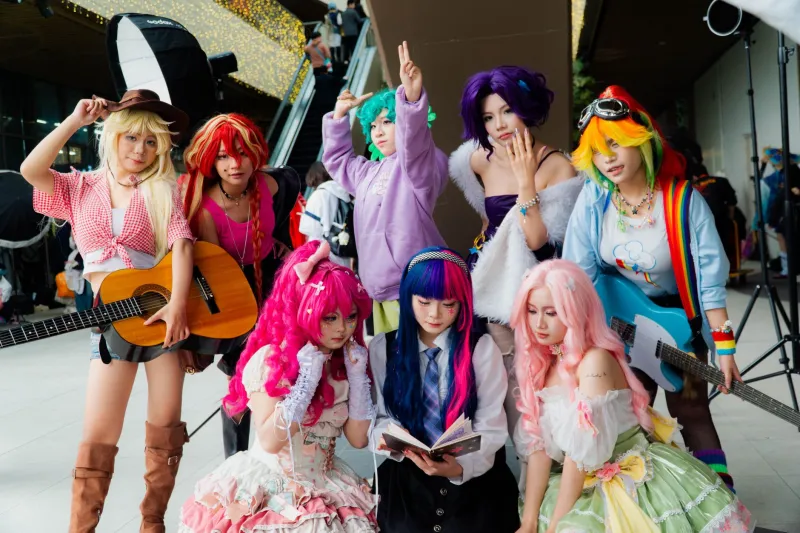
Somewhere between the craft and the content, cosplay changed. It didn't happen all at once. It crept in through Instagram grids and TikTok build videos and convention photographers with professional lighting rigs, until the thing that used to be about showing up in a handmade Sailor Moon outfit and finding your people became something closer to a performance career that nobody signed up for and almost nobody gets paid fairly to do.
This isn't a nostalgia piece about how things were better before social media. They weren't, not entirely. Visibility has given cosplayers platforms, income streams, and communities that didn't exist when the hobby was confined to dealer room hallways. But visibility came with conditions, and those conditions have fundamentally changed what it means to participate in anime fandom through costume — who gets celebrated, what counts as legitimate, and what it costs to keep up.
From Hallway to Homepage
The original cosplay economy was informal and local. You made a costume, you wore it to a convention, people took your picture if they recognized the character. The reward was social — recognition, community, maybe a spot in the convention's official photo gallery. The barrier to entry was time and skill, not following count or ring light budget.
Social media didn't just scale that up. It restructured it entirely. Instagram turned cosplay into a portfolio medium, where the quality of your photography matters as much as the quality of your craft. TikTok turned it into content — the build process, the transformation reveal, the character performance — each step optimized for engagement metrics that have nothing to do with how good the costume actually is. The audience expanded massively, and with it came all the pressures that audiences bring: opinions, comparisons, and the constant low hum of evaluation.
Professional cosplayers — people who make a genuine living from the craft — represent a small fraction of the total community. But their existence has set a standard that the entire ecosystem now measures itself against. When someone with 400,000 followers posts a $2,000 armor build with professional studio photos, it recalibrates what "good cosplay" looks like for everyone scrolling past it, including people who are making their first costume with a $40 Joann Fabrics budget and a YouTube tutorial.
The Sponsorship Trap
For cosplayers trying to turn the hobby into income, the path runs through brand partnerships — fabric companies, wig suppliers, prop manufacturers, and increasingly, gaming peripherals and energy drinks that want access to the nerd-adjacent audience cosplayers have built. This is real money, and for people who've invested thousands of hours and dollars into their craft, it feels like overdue recognition.
But the sponsorship economy comes with its own distortions. Brands want content that performs. Performance means engagement. Engagement means posting constantly, chasing trending characters, and optimizing every creative decision for algorithmic visibility rather than personal interest. A cosplayer who built their following by doing deep-cut Berserk armor pieces might find themselves pressured — by follower expectations, by brand requirements, by the simple math of reach — to pivot to whoever the current season's most popular character is.
The craft doesn't disappear, but it gets subordinated. The costume becomes content before it becomes art. And the cosplayer becomes a content creator who happens to sew, rather than a craftsperson who happens to have an audience.
Body as Battleground
The most corrosive element of cosplay's influencer era is the way it has amplified body-based gatekeeping. This isn't new — cosplay communities have always had factions that believe certain characters should only be portrayed by people with certain body types — but social media has given those voices a much louder microphone and a much faster feedback loop.
Comment sections and DMs have become vectors for a specific kind of cruelty dressed up as fandom investment. "That character isn't plus-size." "You don't have the build for that armor." "This doesn't look right on your body type." The criticism gets framed as authenticity concern — protecting the integrity of the character — but the actual function is exclusion, and the actual target is almost always fat people, disabled people, and people of color cosplaying characters who were designed as thin, able-bodied, or racially ambiguous in ways that default to white in Western interpretation.
The psychological toll on cosplayers who receive this feedback consistently is real and documented. Body image issues, anxiety around posting, and outright quitting the hobby are common outcomes. And the cruel irony is that the people most likely to be targeted are also the people for whom cosplay often serves the most important community function — finding visibility and belonging in a fandom that mainstream culture still treats as marginal.
What Gets Lost
There's a version of cosplay that exists outside the influencer economy, still. It's in the convention hallways at smaller regional events, in Discord servers where people share WIP photos without follower counts attached, in the quiet satisfaction of finishing a piece that nobody else is going to photograph. That version hasn't disappeared.
But it's harder to find now, because the loudest version of cosplay — the one that surfaces on your For You page and in convention coverage and in brand partnership announcements — is the monetized one. The influencer version has become the face of the hobby in a way that makes the informal, unglamorous, just-for-love version feel almost countercultural by comparison.
This matters for anime fandom broadly because cosplay has always been one of the most participatory entry points into the community. It's the thing that turns watching into doing, that takes fandom from a passive consumption experience into something you make with your hands and wear on your body. When that entry point gets gatekept by follower counts and body standards and professional production values, the community loses something it can't fully replace with discourse and merchandise.
The Craft Deserves Better Than This
Cosplay at its best is genuinely extraordinary. The skill involved in high-end prop fabrication, the creative interpretation that goes into translating a 2D design into a wearable three-dimensional object, the performance element of embodying a character in physical space — these are real arts, and they deserve recognition that isn't filtered through the distorting lens of engagement metrics.
The people doing this work — at every skill level, with every body, for every character — deserve a community that values the doing over the posting. Some corners of cosplay culture are actively building that. But as long as the influencer economy sets the terms, the craft will keep paying a price that the brands and platforms profiting from it will never have to.